
Outbound lead generation remains a critical growth lever for B2B technology and software companies, especially those expanding internationally. Yet the way outbound is executed has changed dramatically in recent years.
Mass automation, generic AI messaging, and high-volume outreach promise speed and scale. In reality, they often deliver the opposite: low response rates, damaged brand perception, and missed opportunities with high-value accounts.
Based on years of hands-on experience supporting international growth for complex B2B solutions, Aexus takes a different view: outbound works best when humans lead, structure supports, and AI assists (not replaces) the process.
There are different types of lead generation and a lot of different tactics you can use. To find out exactly how outbound lead generation works, we spoke to Can Paul Urganci, Sales Manager at Aexus.
Why should you consider outsourcing lead generation?
“When you start to look at outbound lead generation, it’s important to consider your options. A lot of companies decide that they want to take care of it in-house but before we get into that, I’d like to make a few points on the benefits of outsourcing your lead generation.
The number one benefit of outsourcing is that it will give you a consistent stream of high-quality leads flowing into your sales pipeline. Many companies are experiencing one problem: the sales development representatives are usually relatively young without a lot of work experience. Companies must then invest a lot of time and resources into training them for lead generation and outreach and for them to become successful at it. Especially for when outsourcing sales for SaaS.
It’s also not uncommon that once they reach that level, the valuable staff that you just trained gets headhunted, they leave, or they want to progress in their sales role to account management. Either way, the outcome is that knowledge is leaving the lead generation department, which clearly is not always the most efficient way to go.
Outsourcing lead generation solves this problem. You don’t have to worry about training the sales representatives or losing them, and on top of that, the sales representatives in an outsourcing agency are already experienced in these activities. If you choose to work with a lead generation agency that is specialized in the technology and software sector, they already have experience in selling complex technical solutions, having in-depth knowledge of the market, and a thorough understanding of the specific domain. Additionally, they have senior sales managers in the team to add to the pool of knowledge. With outsourced lead generation, you get consistency and quality.”
How are we organizing lead generation activities?
“Strategy is the most important aspect of the process. Everything starts with defining your ICP (ideal customer profile) so that your targeting profile is clear. That way, it is also easier to determine how and where to reach them more efficiently and understand their problems and needs and how your offering can benefit them. You can start the sales activities by assessing your current assets to see if you already have customers in the relevant field. Ideally, you want to pick the low-hanging fruits. So, if you have had previous success in this area, you can use similar tactics in the new market. If you already have an existing network, this is also helpful as you have a ready list of people you can contact.
It is also necessary to have a structure in place. This gives you the guidelines you need to stay on track and prevents you from getting side-tracked. Once you’ve defined your goal, you can set the parameters around how to achieve that. You can block time for outreach activities and follow-ups. A real must though is a weekly team catch-up where you can assess the past week’s activities and the results. This gives you a chance to analyze what’s working and strategize how to continue.
Outreach can be done via phone, email, message as well as several other channels. It can help with motivation and staying positive if you set a target before you start, such as ‘7 qualified leads this week’. Don’t forget to plan out a strategy for how to reach that goal.”
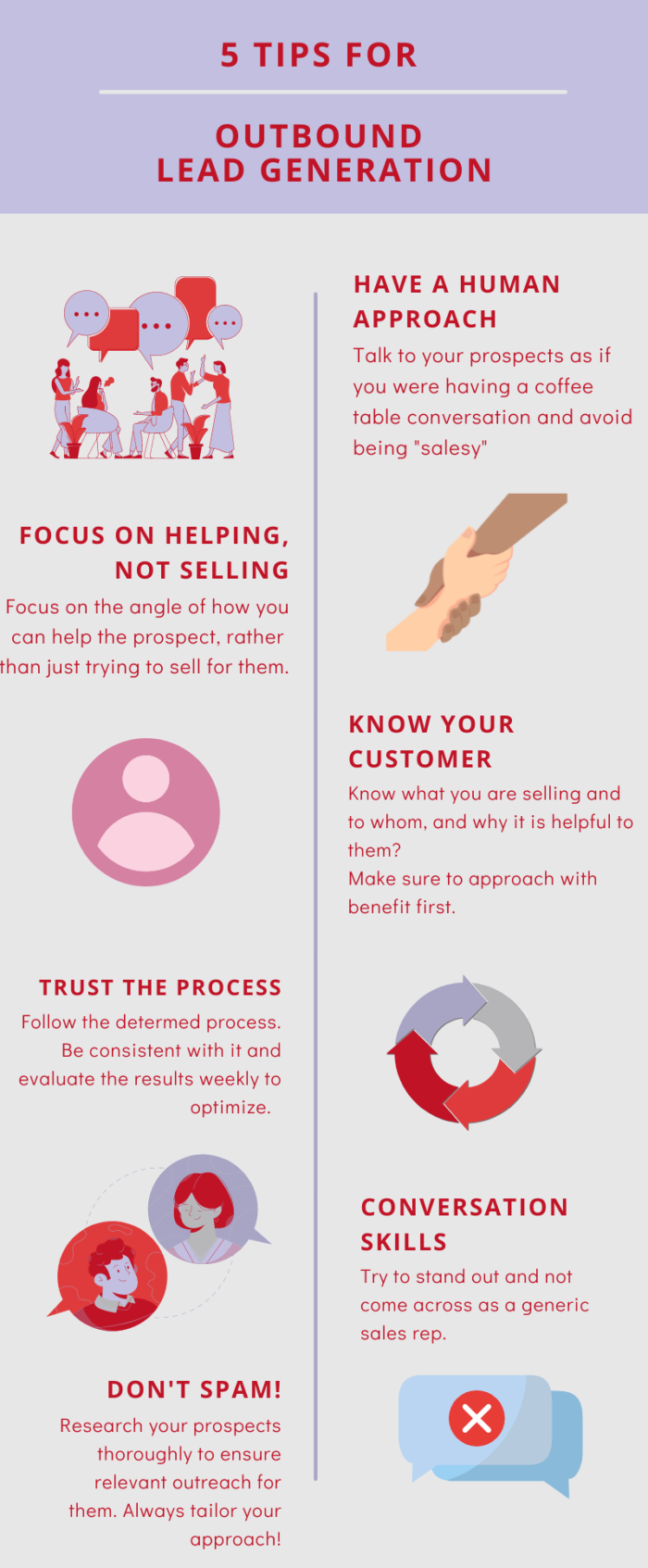
Can Paul’s top 5 tips for outbound lead generation activities:
1) People like to be treated like people, so talk to prospects as if you were having a coffee table discussion in a canteen. Also, if you’re really trying to help rather than sell, that’s more valuable to the client and a useful way to formulate your pitch.
2) It’s important to fully understand what you are selling and why you are targeting a specific prospect. In tech particularly, you should translate the complex benefits in a way that is easy for the prospect to understand.
3) Follow the process and evaluate the results every week to hone the process to perfection.
4) A good SDR knows how to not come across as a typical, generic sales representative. They can build rapport quickly and have excellent conversational skills.
5) No one likes a spammer. Research your prospects thoroughly so you can ensure your outreach has relevance to them. I cannot stress enough the importance of a tailored approach.
Why Mass Automation Fails for B2B Lead Generation
Automated outbound tools are tempting. They offer volume, speed and low marginal cost. But in complex B2B sales environments, mass automation often fails for several reasons:
- B2B buying is not transactional
Enterprise and mid-market buyers don’t respond to generic value propositions. Their challenges are contextual, political, and often unique to their organization. Automated sequences struggle to reflect this nuance.
- Automation erodes trust
Decision-makers recognize templated messages instantly. Once trust is lost, even a strong solution struggles to regain attention later in the sales cycle.
- Volume kills relevance
High-volume outreach pushes teams toward shallow research and weak personalization. This directly contradicts what modern buyers expect: relevance, insight, and respect for their time.
In short: automation scales activity, not credibility.
The Localization Advantage: Local Languages & Cultural Knowledge
International lead generation adds another layer of complexity. A message that works in the UK may fail in Germany, the Nordics, or Southern Europe, even if translated correctly.
Why localization matters
- Language: Speaking a prospect’s native language removes friction instantly.
- Culture: Communication style, formality, and decision-making differ per region.
- Market context: Local regulations, competitors, and industry maturity shape buying priorities.
At Aexus, outbound teams operate with native speakers, local market knowledge, and cultural awareness. This enables conversations that feel natural, which significantly increases meeting quality and conversion.
Localization is not a “nice to have.” In international B2B sales, it is a competitive advantage.
When to Use AI in Lead Generation (Prospecting Only)
AI absolutely has a role in modern outbound — but only when applied deliberately.
Where AI adds value
- Account and contact research (company size, structure, triggers)
- ICP enrichment and segmentation
- Pattern recognition across successful outreach
- Supporting SDR preparation, not replacing it
Where AI should not lead
- Writing first-touch messages without human review
- Conducting conversations with decision-makers
- Handling objections or discovery calls
AI excels at preparation and acceleration. Humans excel at judgment, empathy, and trust-building. Mixing those roles is where many outbound programs fail.
Real Success Comes From Human-Led Conversations
Across Aexus engagements, the strongest results consistently come from a human-first approach:
- Senior-led outreach, not junior volume dialing
- Conversation over pitching
- Weekly feedback loops between SDRs, sales managers, and clients
- Tight alignment between ICP definition, messaging, and follow-up
Clients repeatedly report:
- Higher meeting quality
- Better-prepared prospects
- Shorter time from first meeting to opportunity
- Stronger brand perception in new markets
Outbound doesn’t fail because buyers dislike being contacted. It fails when outreach lacks relevance, respect, and understanding.
Outbound as a Strategic GTM Component
For tech and software companies planning international expansion, outbound lead generation should never stand alone. It works best when embedded in a broader go-to-market approach that includes:
- Positioning and messaging
- Market selection and prioritization
- Sales process design
- Local execution
- Continuous optimization based on real conversations
This is where outsourced lead generation evolves into sales execution partnership instead of purely appointment setting.
Final Thought
Automation and AI are powerful tools, but they are not shortcuts to trust. In complex B2B environments, growth still depends on people who understand markets, speak the language, and can hold meaningful conversations with senior decision-makers.
Outbound works. Human-led outbound works better.